How Serious Coaches Build Six-Figure Businesses (Without Chaos)
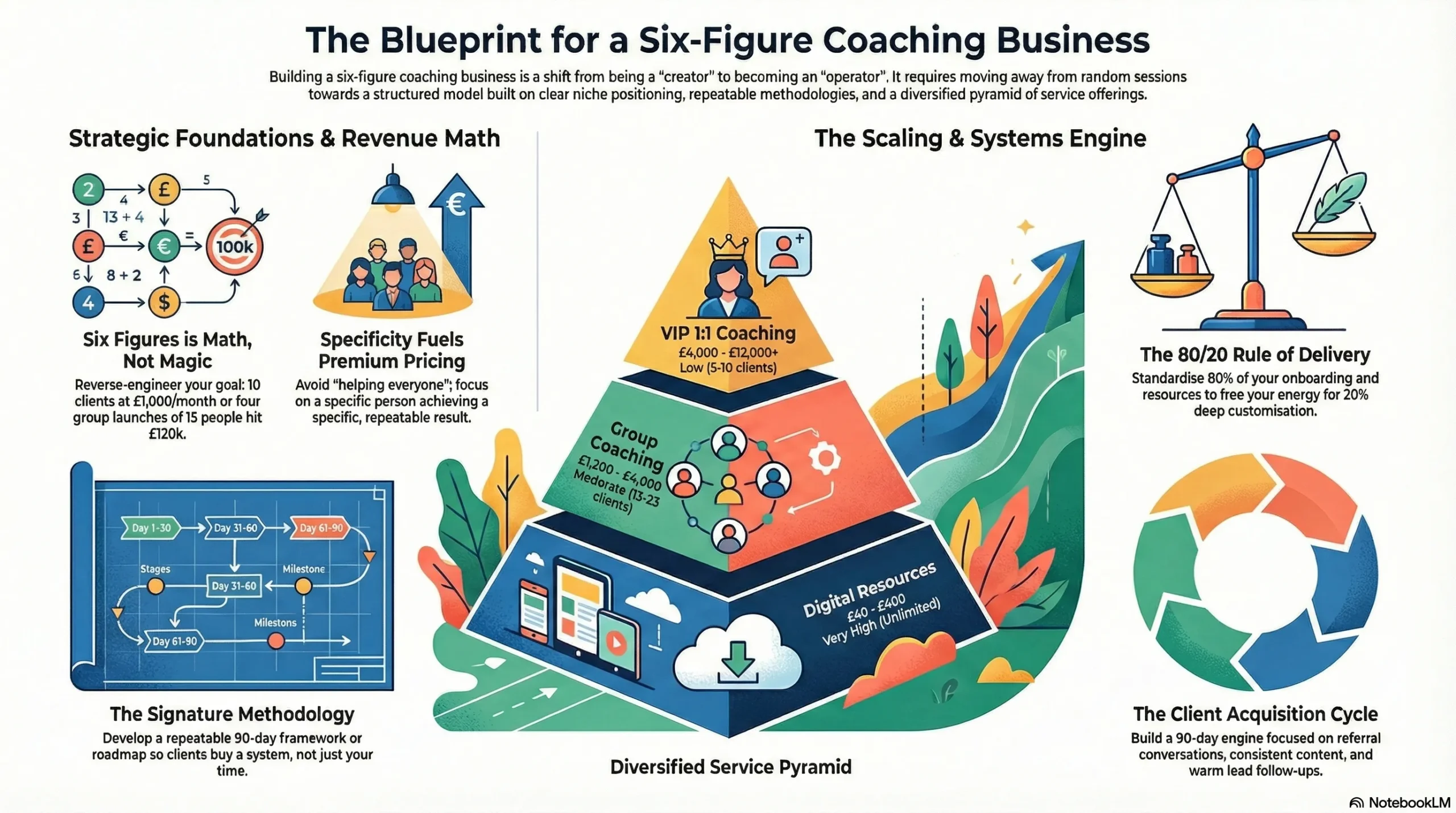
There’s a major difference between launching a coaching offer… and building a real coaching business.
Six figures don’t come from motivation.
They come from structure.
The coaches who consistently cross $100K+ per year follow a predictable pattern:
- Clear positioning
- Strong, outcome-driven offers
- Consistent client acquisition
- Operational systems
Not hacks. Not trends. Not viral posts.
Let’s break down exactly how serious coaches build sustainable six-figure businesses — without chaos or burnout.
Six Figures Is Math, Not Magic
Before tools, funnels, or branding — do the revenue math.
If your goal is $150,000 per year, here are simple ways to reach it:
- 10 clients at $1,250/month
- 15 clients in a $2,000 group program (4 launches per year)
- A hybrid model (private + group + digital offers)
Six figures rarely come from “more followers.”
They come from intentional revenue structure.
Why Most Coaches Stay Stuck
They:
- Hope instead of calculate
- Price randomly
- Don’t reverse-engineer revenue
Serious founders design income before marketing it.
Your Niche Is a Business Decision (Not Branding)
“Helping everyone” is not positioning.
Six-figure coaches are painfully specific.
I help people improve their lives.
I help first-time managers build leadership confidence in 90 days.
Why Specific Niches Win
Specificity:
- Improves marketing clarity
- Increases perceived expertise
- Justifies premium pricing
- Improves conversion rates
Your niche should come from repeatable results — not imagination.
Ask yourself:
What transformation have I delivered multiple times successfully?
That’s your foundation.
Six-Figure Coaches Sell Systems, Not Sessions
Random advice doesn’t scale.
Serious coaches build a repeatable framework, such as:
- A 90-day transformation program
- A 3-stage methodology
- A milestone-based roadmap
- Structured onboarding + progress tracking
Clients don’t want support alone.
They want direction.
If your method can be explained in one sentence — it’s scalable.
If it changes with every client — it’s still experimental.
And experimentation doesn’t scale to six figures.
The Offer Pyramid (Revenue Stability Framework)
Relying on one offer creates instability.
Six-figure coaches structure revenue like a pyramid:
Top Layer: High-Touch 1:1 Coaching
Premium pricing • Limited seats • Deep transformation
Middle Layer: Group Programs
Structured curriculum • Higher scalability • Strong margins
Base Layer: Digital Products
Courses • Templates • Toolkits • Automated resources
This structure provides:
- Income stability
- Predictability
- Growth without stress
If one stream slows down, others support revenue.
Six figures become steady — not chaotic.
Pricing Is Strategy, Not Emotion
Underpricing usually stems from insecurity.
But pricing is not about confidence.
It’s about value delivered.
If your coaching helps clients:
The value is transformational — not hourly.
Serious coaches sell programs.
Not sessions.
Smart Pricing Principles
- Package offers (3–6 months minimum)
- Avoid hourly billing
- Anchor pricing to outcomes
- Increase rates gradually as results compound
High-ticket pricing often attracts more committed clients — leading to better outcomes and stronger testimonials.
Client Acquisition Is a System, Not a Mood
Most coaches say:
“I need more clients.”
What they actually need:
A predictable acquisition engine.
Simple Six-Figure Acquisition Framework
Every month:
- Have referral conversations
- Publish one strong piece of authority content weekly
- Follow up with warm leads
- Book discovery calls
Six figures typically come from:
20–40 high-quality clients annually — not 10,000 followers.
Consistency > virality.
Scaling Requires Operational Discipline
At 5 clients, everything feels manageable.
At 20–30 clients, chaos begins — unless systems exist.
Standardize:
The 80/20 Rule for Sustainable Scaling
- 80% standardized systems
- 20% personalized coaching
Systemization protects your energy while maintaining client experience.
Technology Should Reduce Friction
Tools support growth — they don’t create it.
Technology should provide:
- Clean client flow
- Organized communication
- Automated reminders
- Simple billing
- Centralized data
Flashy dashboards don’t build businesses.
Structured processes do.
Choose tools that simplify — not complicate.
Beyond Six Figures: Leverage for Scale
Once your foundation is stable, expansion becomes strategic.
Ways serious coaches scale:
- Certification programs
- Corporate workshops
- Licensing proprietary methods
- Digital product ecosystems
- Hiring associate coaches
Leverage multiplies impact — but only when built on structure.
Leverage without systems creates collapse.
The Real Measure of a Healthy Coaching Business
Revenue alone can hide dysfunction.
A true six-figure coaching business shows:
Operational clarity > vanity metrics.
Final Thoughts – Structure Creates Six Figures
Six figures don’t come from being louder.
They come from being clearer.
Most coaches don’t fail due to lack of skill.
They fail because they stay creators — instead of becoming operators.
And that shift is what separates hobby coaching from serious business.
Frequently Asked Questions (FAQs)
1. How long does it take to build a six-figure coaching business?
2. Do I need a large audience to make six figures in coaching?
3. What is the best coaching business model for reaching $100K?
4. How should I price my coaching services?
5. How do I get consistent coaching clients?
6. When should I scale beyond six figures?
Ready to Systemize Your Coaching Business?
If you're building a coaching business and starting to feel operational pressure as you grow, it's not a marketing problem — it's a systems problem.
If you'd like a second perspective on your current structure, backend flow, or growth setup, feel free to reach out.
Sometimes one strategic conversation can save you years of trial and error.
Contact Us